Board of Directors

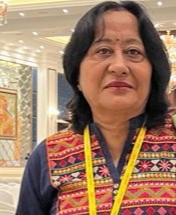
Dr ( Rtd Br Gen) Lalita Joshi

Dr ( Rtd Br Gen) Lalita Joshi

Senior Consultant Ob/Gyn Founder & President
DSSHA – Nepal ( Down Syndrome Support Health Association – Nepal Visiting Consultant Counsellor at CREATORS IVF CENTER PVT LTD , Kathmandu Vice President Asia Pacific Down Syndrome Federation and POSITIONS HELD in Life member NESOG ( Nepal society of Ob/Gyne, Founder General Secretary Menpause Society if Nepal, Past Surgical Division Head and Clinical Registrar at Birendra Army Hospital , Chauni. Past President Rotary Club of Mount Everest ,Lalitpur
Dr Moon Thapa

Dr Moon Thapa

Senior consultant Paediatrician
Experiences in Medical Officer, Shree Birendra Hospital, Chhauni, 2001-2006. Senior Medical Officer, United Nations Mission in Sierra Leone (UNAMSIL), 2004. Medical Staff Officer for UN office for Force Medical, United Nations African Union Mission in Darfur (UNAMID) – 13Nov 2012 to 25 Nov 2013. Pediatrician, Shree Birendra Hospital, Chhauni, 2009 to present. Member Secretary, American Academy of Pediatrics- Friends of Children Fund project on “Preparing Pediatricians for Disasters in Nepal”, 2017-2018<br />
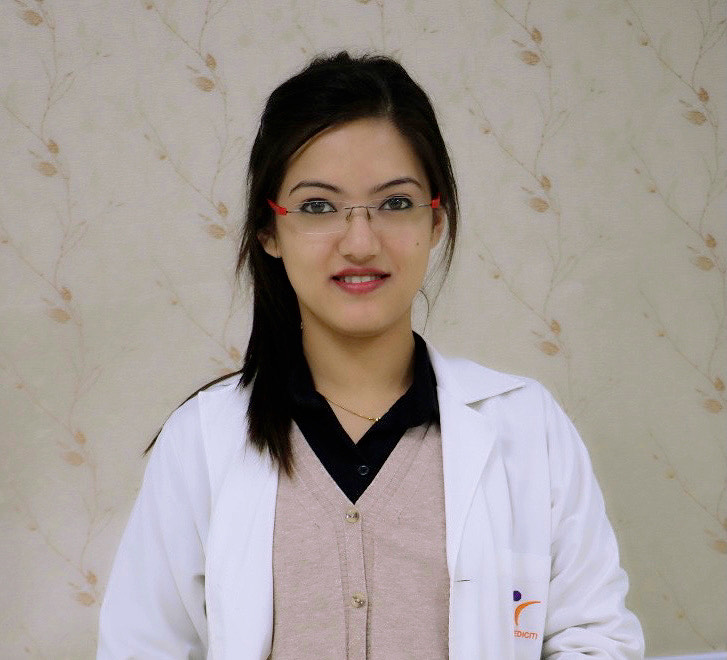
Dr. Reema Shahi

Dr. Reema Shahi

Executive Board Member
Pediatric Physiotherapist at Ashwins Medical College and Hospital (Nepal Mediciti Hospital), Bhaisepati, Nepal (17 September 2017 – present day). Executive Board Member at Down Syndrome Support Health Association – Nepal (DSSHA – Nepal)<br />

President Note:

Dr. Lalita Joshi

In Nepal, the challenge is of parents of down syndrome not having access to basic information on DS related health issues and early development issues. This means they are not in a condition to provide their children with the right support to keep them in good health and develop their potential.

The different mountain terrain and difficult geographical division isolate most of the rural population.

Working in close association with APDSF gave the clear insight how the idea of medical committee could help people of asia pacific region which inspired me to the formation of a multidisciplinary team to help our children with down syndrome to reach healthy adulthood.

The Covid 19 pandemic strengthened and motivated me to establish an organization to cater to such a noble initiative as undiagnosed medical condition lead to the loss of few of our DS child.

Additional DSSHA-Nepal Workgroup and Education for Children

The teenagers who had been fully included in mainstream classes showed gains of more than 2 years in spoken language skills and 3 years in reading and writing ability on standardised measures. These measurements of ‘years’ for typically developing children would equate to 4 and 6 year gains for children with Down syndrome, as they usually progress at about 5 months per year in these measures. In addition, there were gains in maths skills, general knowledge and social independence. There were no differences in personal independence or social contacts out of school between the teenagers educated in special and mainstream classes, and a tendency for the mainstream students to have better behaviour. This study is described in full in “A comparison of mainstream and special education for teenagers with Down syndrome: implications for parents and teachers”, by Sue Buckley, Gillian Bird, Ben Sacks and Tamsin Archer, published in Down Syndrome News and Update .

OPTIMAL LEARNING ENVIRONMENT
Children with Down syndrome need to learn with their neurotypical peers with the necessary individual support to make this successful. Research indicates that it is difficult to provide a maximally effective learning environment in a special education classroom. Children learn from their peers so watching and participating in the curriculum alongside their typically developing peer group will provide learning opportunities throughout the day.
FRIENDSHIPS
Parents and teachers need to do more to ensure that friendships with peers carry on outside of school. An improvement in understanding and support for teenagers and adults with Down syndrome in their homes, shops and leisure activities could be one of many positive results from inclusion.
PROMOTING EFFECTIVE LEARNING SKILLS
Meaningful activities based on pupil’s experience
Visual resources and approaches to aid comprehension of abstract concepts and task demands
New activities based on existing skills
Small steps with opportunities for practice
applying skills in different contexts, situations.